
Gold at the Crossroads
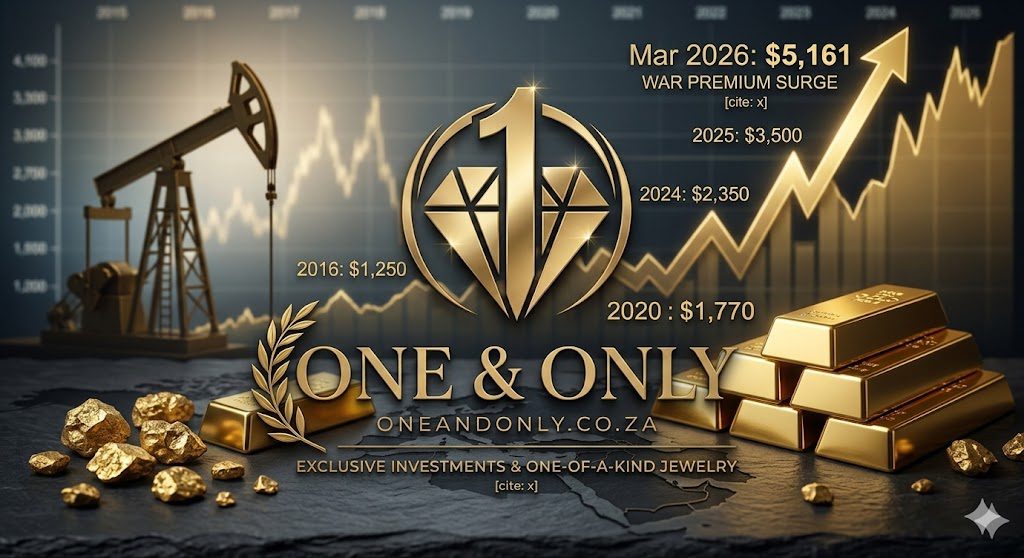
The gold market has entered a “new paradigm.” On March 5, 2026, spot gold prices hovered around $5,161 per ounce, a level that would have seemed like science fiction just a few years ago. Driven by a perfect storm of record-breaking inflation, aggressive central bank buying, and a sudden escalation of war in the Middle East, the “yellow metal” has firmly re-established its crown as the ultimate safe-haven asset.
The Decade in Review: Gold’s Relentless Climb (2016–2026)
To understand where we are, we must look at where we started. A decade ago, gold was recovering from a multi-year slump, trading at levels that today look like the “deal of a century.”
| Year | Average Annual Price (USD/oz) | Context / Key Driver |
| 2016 | $1,250 | Recovery from 2015 lows; Brexit vote shock. |
| 2017 | $1,257 | Low volatility; steady global growth. |
| 2018 | $1,269 | Rising US interest rates capped gains. |
| 2019 | $1,393 | Trade war tensions; Fed begins cutting rates. |
| 2020 | $1,770 | COVID-19 Pandemic: Global flight to safety; prices hit then-record $2,075. |
| 2021 | $1,798 | Inflation begins to stir; crypto competition rises. |
| 2022 | $1,801 | Russia-Ukraine war starts; aggressive Fed rate hikes. |
| 2023 | $1,940 | Banking crisis (SVB); end of the rate-hike cycle. |
| 2024 | $2,350 | Persistent inflation; massive China/India retail demand. |
| 2025 | $3,500 | The Great Inflation Spike: Global debt concerns; de-dollarization. |
| 2026 (Mar) | $5,161 | Middle East Escalation: US-Iran conflict triggers safe-haven surge. |
The Middle East Catalyst: War and Speculation
The most immediate driver for the current price surge is the outbreak of hostilities between the United States and Iran in late February 2026. Historically, war provides a “geopolitical premium” to gold, but the 2026 conflict is unique due to its impact on energy and inflation.
1. The Safe-Haven “Jump”
As of early March 2026, gold has already seen a 5.2% intraday spike following reports of strikes on military leadership. Analysts at Natixis suggest that in a “limited action” scenario, gold could quickly reach $5,500 to $5,800 within weeks. However, these gains are often volatile; if the conflict stabilizes or becomes “predictable,” a portion of the premium may evaporate as traders book profits.
2. The Oil-Inflation Connection
The Middle East conflict has sent oil prices skyrocketing. Because gold acts as a classic hedge against inflation, higher energy costs (which drive up the price of everything from transport to manufacturing) create a secondary “tail-wind” for gold. Goldman Sachs estimates that a sustained 12-month disruption in the Strait of Hormuz could lift gold’s fair value by 15–25% beyond current levels.
3. Central Bank De-Dollarization
A “hidden” factor in the 2026 price surge is the behavior of central banks. Nations like Poland, China, and Russia have accelerated their gold purchases to diversify away from the US dollar, fearing that geopolitical sanctions could freeze their liquid assets. This “institutional floor” prevents gold from crashing even when the initial war-scare subsides.
Looking Ahead: Will Gold Hit $10,000?
While $5,000 per ounce was the “psychological barrier” of 2025, some commodity experts, including Rob Bruggeman of The Wealthy Miner, are now discussing a long-term target of $10,000 per ounce.
The Speculation:
- Bull Case: If the Middle East war expands to include major regional infrastructure damage, a global energy crisis could force central banks to print more money to stabilize their economies, devaluing fiat currencies and catapulting gold into five-figure territory.
- Bear Case: If a ceasefire is brokered quickly, or if the Federal Reserve keeps interest rates “higher for longer” to combat war-induced inflation, gold could see a sharp correction back toward the $4,500 level.
Final Thoughts
For the last decade, gold has rewarded the patient. Whether you view it as a hedge against a “shooting war” or a shield against the “silent war” of inflation, the data is clear: gold remains the king of crisis. As we navigate the volatility of March 2026, the question isn’t whether gold is expensive—it’s whether you can afford to be without it when the world is on edge.
Disclaimer: This post is for informational purposes only and does not constitute financial advice. Precious metals are volatile; educate yourself and conduct your own research before investing.
#GoldMarket #Investing2026 #WealthManagement #OneAndOnlySA #Commodities